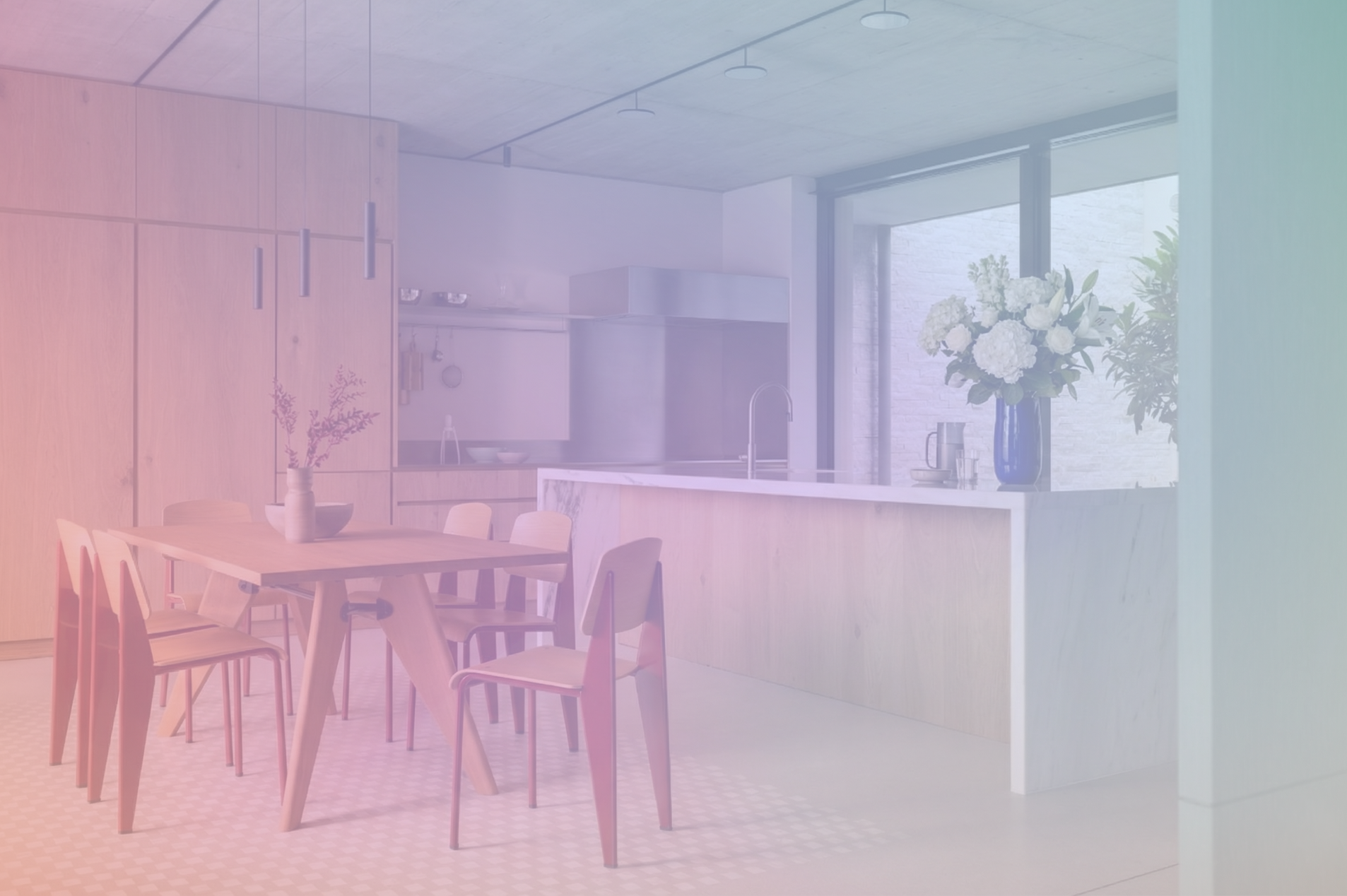

To break the ceiling on Average Order Value (AOV), furniture brands must fundamentally rethink their collection pages. It is time to stop building spreadsheets and start building Digital Visual Merchandising strategies that guide the eye, build the room, and quietly expand the basket size.
The Problem with the Grid
The standard e-commerce grid is a symptom of database-driven design. It assumes the customer knows exactly what they want and only needs a fast way to filter and sort. But in the world of high-consideration design, this is rarely true. The affluent consumer is often paralyzed by choice and terrified of making an expensive aesthetic mistake.
When presented with a grid of 40 different accent chairs, the cognitive load is immense. Furthermore, the grid isolates the product. If a customer is looking at a bed frame on a stark white background, they have to actively search the site for nightstands, attempt to mentally cross-reference the wood finishes, and hope they match. More often than not, the friction of this mental assembly causes them to buy only the primary item, or worse, abandon the cart entirely.
Strategy 1: "Shop the Room" as the Anchor
The antidote to the grid is contextual commerce. You must inject lifestyle context directly into the browsing experience.
The most effective way to do this is by punctuating your standard collection grids with high-resolution, fully styled lifestyle imagery that is shoppable.
The Execution: Do not simply place a pretty picture at the top of the category page as a "hero banner." Embed the styled room into the grid itself. As the user scrolls through rows of dining chairs, interrupt the pattern with a full-width image of a beautiful dinner party setting.
Critically, this image must feature interactive "hotspots" or a clean sidebar that lists every item in the photo.
- The Psychology: You are shifting the user’s mindset from "product evaluation" to "lifestyle aspiration." When they see how perfectly the bouclé dining chairs pair with the blackened steel table and the linen napkins, the desire shifts from acquiring a single chair to replicating the entire scene. You have effectively turned a $600 chair search into a $4,000 dining room discovery.
Strategy 2: Algorithmic Bundling (The "Complete the Look" Module)
If you cannot sell the whole room, your next objective is to sell the immediate ecosystem of the primary product. This requires moving beyond the lazy "Customers Also Bought" widgets, which are often poorly mapped and suggest irrelevant items (e.g., suggesting a sofa when the user is buying a sofa).
Intelligent cross-selling requires deliberate, design-led bundling.
The Execution: When a user clicks on a primary anchor piece (like a bed frame or a dining table), the product page should feature a highly curated "Complete the Look" section positioned prominently below the "Add to Cart" button.
- Design-Led Pairing: Do not leave this to a basic algorithm. Your design team should manually map which nightstands pair aesthetically with which beds.
- The "One-Click" Bundle: The friction to add these items must be zero. Allow the user to check a box next to the matching nightstands and the recommended linen set, adding all three items to the cart simultaneously.
- The Bundle Incentive: For high-ticket items, offering a flat percentage discount on the bundle (e.g., "Add the matching nightstands and save 15% on the set") is far more effective and brand-protective than discounting the core product. It increases AOV and perceived value simultaneously.
Strategy 3: Visual Hierarchy and The "Good, Better, Best" Flow
In a physical showroom, the most expensive, visually arresting statement pieces are placed at the front to draw you in, while the simpler, entry-level items are positioned further back. Online, however, brands often sort by "Best Selling" (which usually means the cheapest items appear first) or "Newest" (which lacks strategic intent).
You must take control of the visual hierarchy of your collection pages to guide the customer toward higher-margin items.
The Execution:
- The Anchor Strategy: Manually merchandise the first two rows of your collection pages. Place your premium, high-margin "halo" products here. Even if the customer cannot afford the $10,000 velvet sofa, seeing it first establishes a high price anchor, making the $4,000 sofa on the next row feel like an accessible, reasonable choice.
- Breaking the Uniformity: Use different aspect ratios to highlight key pieces. If every product image is a uniform square, nothing stands out. Allow your hero products to take up double the width of a standard grid square. This mimics the feeling of walking past a large, featured display in a store, subconsciously signaling to the user that this specific item is important.
Strategy 4: The Micro-Conversion (Accessorizing the Cart)
The final opportunity for digital visual merchandising happens in the cart slide-out or checkout page. Once the customer has committed to the large purchase, their buying resistance is temporarily lowered. This is the moment for the low-friction, high-margin accessory upsell.
The Execution:
- In-Cart Curation: If the user adds a leather armchair to the cart, the cart slide-out should immediately suggest a complementary cashmere throw or a specific leather care kit.
- The Logic: These items should be low-cost relative to the main purchase (under $150) and visually relevant. It feels less like an upsell and more like a helpful service suggestion to complete the experience.
The Bottom Line: Curation is a Commercial Imperative
E-commerce managers often view visual merchandising as the domain of the creative team—a nice-to-have aesthetic layer that exists separately from the hard metrics of conversion rates and revenue.
This is a fundamental misunderstanding of how luxury buyers make decisions. In the design world, curation is the conversion lever.
By treating your website not as a digital catalog, but as a dynamic, curated showroom—where products are presented in context, intelligently bundled, and hierarchically structured—you stop forcing the customer to do the hard work of design. You guide their eye, you build their confidence, and in the process, you naturally and elegantly expand their basket size.